Tires are made of rubber, not plastic. U can’t fool me, science.
🚅🚃🚃🚃
I wonder as well how much comes to play from tires dumped in the ocean like the Osborne reefs as they’re degradation over time.
I feel like the solution to this starts with t and ends with s.
I know what you’re thinking but we’d have to create whole different kind of sewer network if you wanted to travel via toilets (a la harold halibut)
Tires.
Thank you. It’s time people started taking Trebuchets seriously as a mode of transport.
It’s a one-way ticket because you won’t need more.
Using Tardises (is that the correct plural) wouldn’t just cause a mess in space but also in time.
tssssssss like the sound of a perforated tire
Paris Metro has entered the chat.
In waters is consistently about a third from tires and a third from synthetic textiles (bcs washing).
Eg
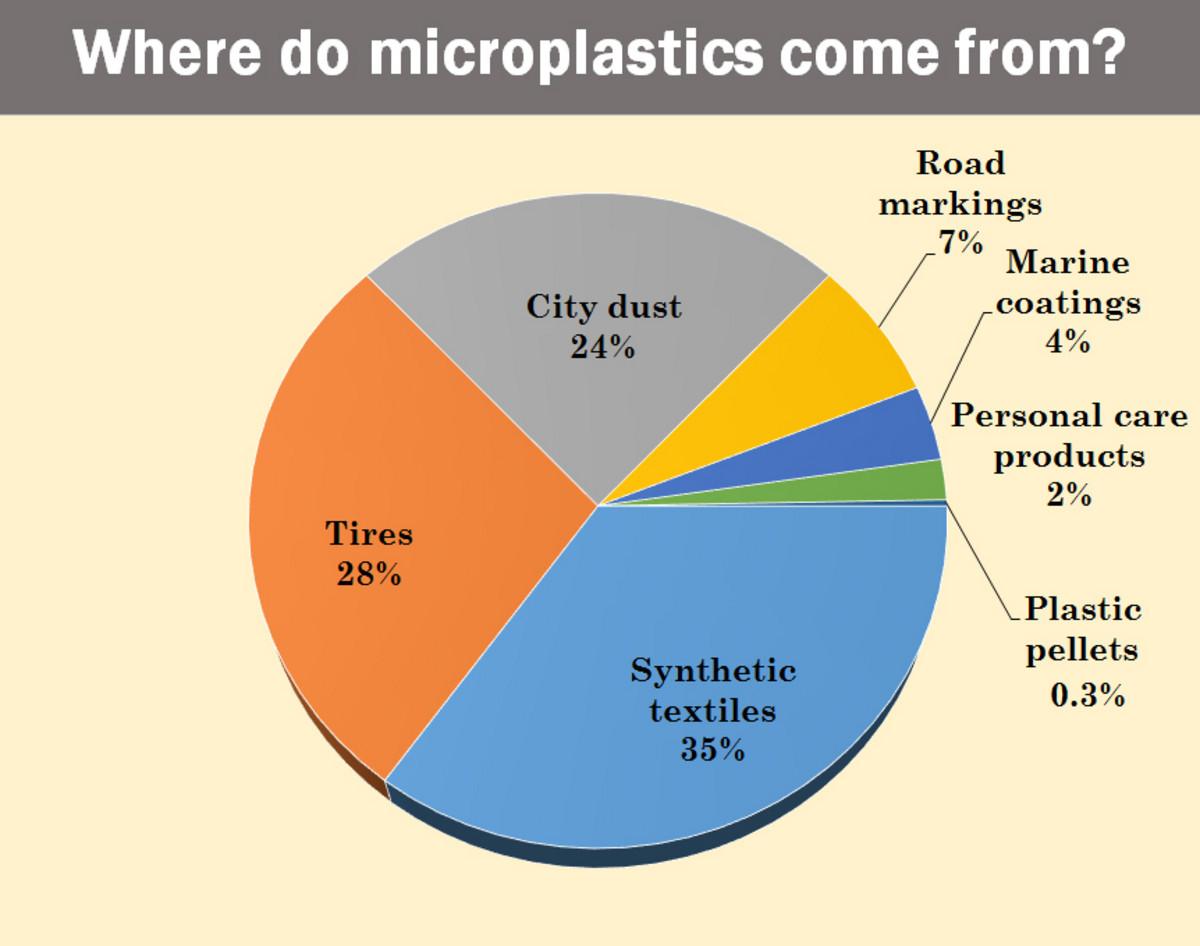
Of course the 2% contributor has been addressed, personal care products now aren’t allowed to have plastic “abrasives”, which is a good change anyway as plastic is useless for improving scrubbing
No other sources have had any work done to mitigate the problem
Lol, yeah, my toothpaste really doesn’t need plastic glitter. Then again, neither does my car’s paint, but here we are.
Glitter in paint is usually the mineral Mica.
What is the data source for this chart?
I’d like to see the numbers, but I imagine that the synthetic textiles chunk comes from the sheer volume of fast-fashion and trashion produced every year. I have synthetic shirts that are well over a decade old and still look and function as brand new. My cotton shirts under similar wear get ratty and frayed in that time frame (and require harsh chemicals for stains).
If we stopped over-washing and over production, I wouldn’t be surprised if the lifetime ecological footprint of synthetic garments is less than a cotton equivalent.
i would imagine most comes from shedding of the fabrics in regular use and washing+drying, basically the rate is mostly constant fast fashion or not. I would think the only viable solution would be limiting/stopping or finding alternatives to synthetic fibers. Also perhaps some kind of microplastic filter in washing machine outlets mandated by regulation could be a way to limit the emissions of new microplastics.
So… Cotton/Linen/Wool? The technology is fine, its only downside in most applications is simply cost. Cotton clothes are more comfortable, less stinky, less polluting, and won’t fuse with your skin and disfigure you for life if they accidentally catch on fire. On top of not making microplastics soup every wash cycle.
If we cared to actually solve the problem of plastics in fast fashion we could ban them, with some exceptions for sportswear and shoes where synthetics have some actually useful uses. Hell, we could even make it an easy transition by gradually pulling back the allowable synthetic content for x years.
But it would directly kneecap Shein and H&M’s business model so we have to weigh all the pros against that.
I’m sure would find equivalent non-polluting alternative materials within a couple of years if we banned all plastics (“synthetic textiles”).
But only if we actually put the ban in place.
Otherwise the answer is never.
Yes, this is how I understand it too, it’s not like half of your shirt ends up in the ocean (and the amount of plastics that ends up in the landfills isn’t really included in the microplastics that circle around - that’s a problem for the future - so the vomit-inducing fast fashion/consumerism is a bigger problem from every other standpoint).
And yes again on the only viable solution - it’s stupid to try to slightly improve something you are gonna be producing more of every year. The “improvements” are just propaganda we are (successfully) fed for decades & it just muddies the discussions whilst keeping the current/same profiteers in power (without even changing the business model).
My decade old plastic shirts have faded, the linen ones last better, but yeah, they stain (and I’m not going to test them with plastic coatings to improve stain resistance!). I only get bold colours, so my pastel shirts are very faded
Wow tires might as well be almost half
Not sure what city dust is composed of but imagining some of it is tires
City dust is everything that’s not covered by the other categories, e.g. car-related pollutants like paint or wear of brake pads, but mainly I guess packaging materials and plastic film as they seem not to be included in the other categories.
You don’t have a good idea to replace synthetics in textiles, do you? I can’t stand cotton shirts, but I would really like to skip synthetics.
some people are allergic to cotton, because of lanolin produced by sheep that is aprt of the wool, people are allergic to it. polyester also can cause rashes in some people.
If you live somewhere cold – wool.
If you live somewhere hot – linen.
Right now I’m wearing a wool shirt under a linen shirt. I’d count the local weather as “warm”
I think I have to give linen a second chance. Or maybe modal/lycocell/etc. Germany isn’t sub Saharan warm, but I’m built like an oven 😐
Edit: oh, this is why I gave up on them. I’m not paying 85€ for a single shirt
Keep an eye out at thrift shops, maybe? I assume those exist near you. Probably much less availability that way, so you might have to look for a while, and fewer pattern options as a result, but cheaper and for a test maybe better because already pre-softened through wash and wear?
Bamboo? I have bamboo socks that are warm and soft, but they take a little extra to dry
I tried, but it was really hard finding good quality. It shrunk to show my soft, rosy belly 😐
If we banned plastics (gutting their lobbies affecting everything from taxes, laws/regulation, logistics, etc) we would have natural replacements in like 5 years & nobody would even think of the times before (except for environmental cleanup purposes).
They said you can’t have water-tight bags from non-fossil fuel sauces, now they are everywhere. The paper industry just like developed see-through water-tight “paper” (the lil windows in envelopes & some packaging) bcs they didn’t want to deal with the petrol industry.
The non-plastic drinking straws? Yeah, explain to me why they intentionally sux even tho we always had the materials for a seamless transition?
(Also, just in case an fyi - cotton, like wool, can be processed and woven if very much different ways which makes for basically divergent materials, it’s a whole science. The mainstream stuff is mostly the same tho.)
The fact that some paper straws perform as well as plastic suggests that the bad ones are just cheaper and are used by companies that don’t care. When I used to drink the sort of drinks that use straws I carried a steel straw to use in places that didn’t supply good straws
Yeah, logistics are hard & I imagine a small bar/café doesn’t have the (kind of?) staff to think about straws or where else to search for the ones that don’t fill costumes with nasty shit - they just pick whatever their usual supplier has on offer so it’s less paperwork.
And it’s not like anyone blamed them for shitty straws anyway.
Hemp.
I’m interested, but I wasn’t able to find a shirt yet. I have to keep digging.
Have you tried Rayon? It’s a semi synthetic fabric made from cellulose and iirc biodegradades decently.
I have never heard of this, but I will have a look. Thanks for the suggestion.
People wore animal and plant based clothing for hundreds of thousands of years
And I can’t stand how it feels. Cotton feels sweaty all the time and wool is just too warm. I’m starting to wear sweaters when temperatures hit single digits (Celsius) and jackets when below zero. I’m not made for warm and friendly. I need breathable. Cotton sucks here.
Get yourself a merino wool base layer shirt, like a thin one not sweater thick. It’ll be surprisingly cool.
Try hemp or bamboo fibre (has different names like rayon, tencel, lyocell).
You could try different thicknesses of cotton and see how it feels. Or cotton blended with the other materials. Some companies list their shirts as lightweight or heavyweight or give cloth weight in gsm (grams per square meter) or oz (ounces per square yard). A lightweight and oversized shirt will be good in the heat.
I’ll try that. Thank you.
Cotton feels sweaty all the time
The opposite for me, synthetic clothing makes me sweat like a bastard, I try to only buy 100% cotton shirts and stuff
Strange. But I’m dripping in that stuff.
Tyres specifically break down on hard surfaces that typically drain directly to a nearby waterway. Used tyres were/are popular for boat fenders and seawalls and the like. That and literally just dumping them. I’m not surprised.
City storm drainage is already treated for a population over 100k (in the us). But never for these microplastics. Seems like that would be a good place to start.
when growing up people dumped tires purposedly so go back later and tire fish for catfish