The modern translation is a fairytale but if you get into the original Greek bible texts and supporting and opposing texts from Greco-Roman civilization it paints a very interesting picture of the corruption of the ancient world into the situation we call Western Civilization today. Hopeful eras where humanity improved like the Renaissance and the American Revolutionary War were in large part due to study and reemergence of pre-Christian pagan ideas from Greek antiquity.
Biblehub has a Greek text option and full translation of words if you want to dive in. Most of the ideas I picked up from Dr. Ammon Hillman who has a couple of books out from several years ago, you can find quite a few interviews with him online and he livestreams at least weekly. Quite a fertile field of study, the differences in Bible texts between English/Latin and the original Greek.
And translation issues. Words and meaning can change a lot when something is translated. Leviticus went from Hebrew to Greek to Latin to English (and most other modern languages of course).


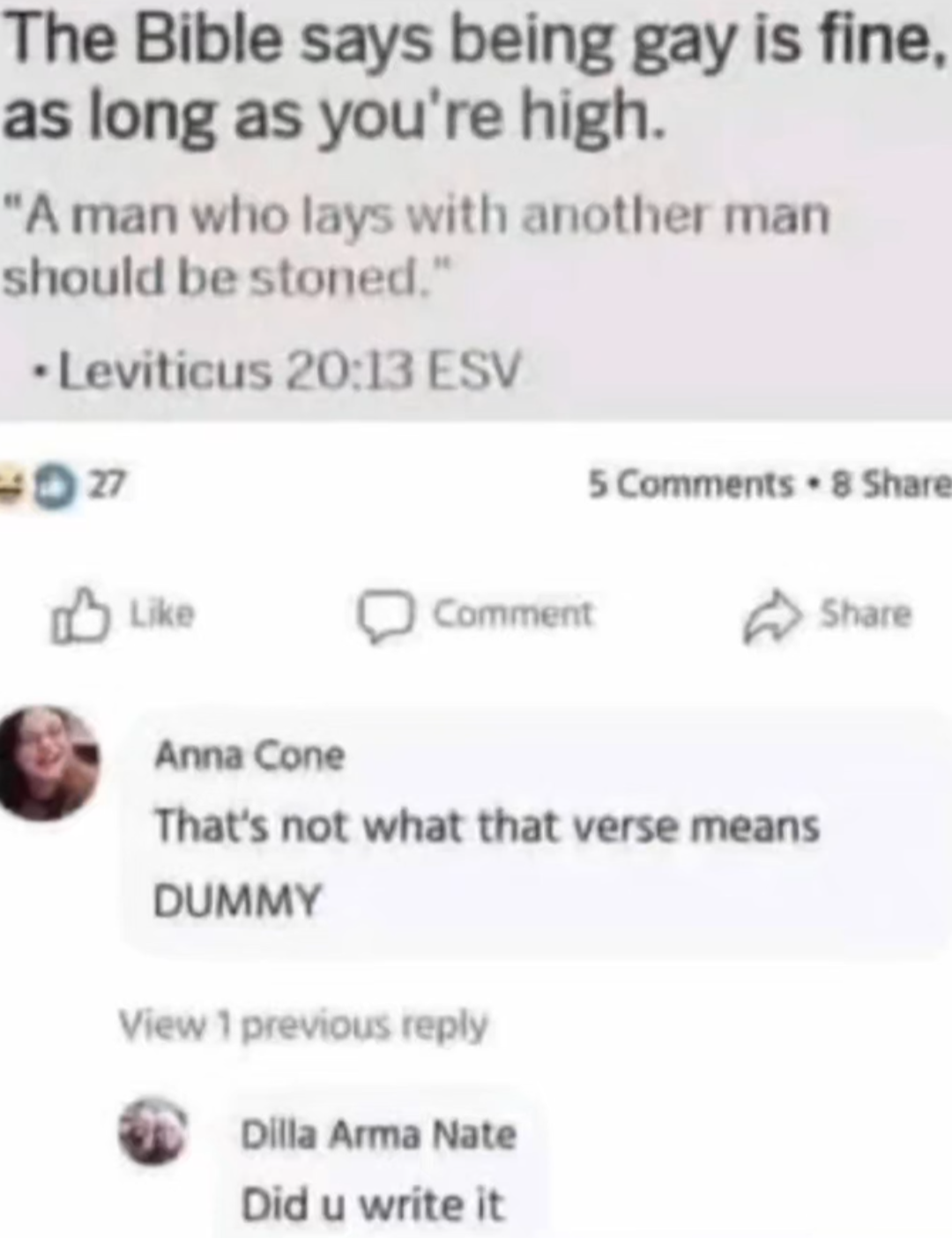
The Bible is open to interpretation
I interpret it as a mid fantasy book. The epilogue is fucking boring as hell.
The modern translation is a fairytale but if you get into the original Greek bible texts and supporting and opposing texts from Greco-Roman civilization it paints a very interesting picture of the corruption of the ancient world into the situation we call Western Civilization today. Hopeful eras where humanity improved like the Renaissance and the American Revolutionary War were in large part due to study and reemergence of pre-Christian pagan ideas from Greek antiquity.
This sounds like interesting material.
Any books out there that compare and contrast? I’m curious, but not enough to possess two different Bibles.
Biblehub has a Greek text option and full translation of words if you want to dive in. Most of the ideas I picked up from Dr. Ammon Hillman who has a couple of books out from several years ago, you can find quite a few interviews with him online and he livestreams at least weekly. Quite a fertile field of study, the differences in Bible texts between English/Latin and the original Greek.
I believe that line was originally written as “man shall not lie with boys” and is about pedophilia, not homosexuality.
Nah, it was about the sinfulness of sharing Lays brand potato chips
You can share the chips but you can’t grow the potatoes.
Excellent point, buttnugget
And translation issues. Words and meaning can change a lot when something is translated. Leviticus went from Hebrew to Greek to Latin to English (and most other modern languages of course).