It’s not really that complicated a strategy for a large, well-financed team of full time activists to produce, and really it’s within a genre of “leveraging propagandized outrage” shock activism seen more frequently in the past decade from larger advocacy groups. Like those incidents of people vandalizing art with soup, or pouring products on the ground in grocery stores, or painting monuments. It generates outrage, that outrage garauntees wide news coverage, that wide news coverage reaches and activates 100x or 1000x the number of fresh new activists that traditional advocacy acts might, making the media-directed vitreol of millions who will forget and move on within a week fantastically worthwhile. It basically taps into the power of existing propaganda against a movement, using it to ultimately drive interest in the movement. I forget where I was reading an interview with a Greenpeace leader, about how they simply couldn’t pass on these tactics because of how effective they are, and they arrived at that conclusion not by prediction but by experience.
From what I gathered reading the interview mentioned (I’ll see if I can find it) it was the statistical results they couldn’t argue with. There was just as much skepticism and resistance to these tactics internally, until the results couldn’t be ignored. Activists are generally concerned about likability and are not analagous to nihilistic billionaire narcissists.
Results indicated that PETA’s attack message against abuses at corporate pig farms was effective in eroding the credibility of the corporate food-industry raising animals for consumption. At the same time, PETA’s credibility rose overall after participants viewed the PETA attack message.
That seems to align with your argument but not with the topic. The study was focused on corporate pig farm.
The 53 participants were volunteers participating for course credit from upper division communication courses at a large public university located in an area where agribusiness interests loom large.
This is a terrible sample to base any conclusions on.
The results only give clear indication that such advocacy messages intensify already existing negative predispositions
And this indicates it is not a generally useful approach.
The study doesn’t measure how long the effect lasts; outrage is fleeting.


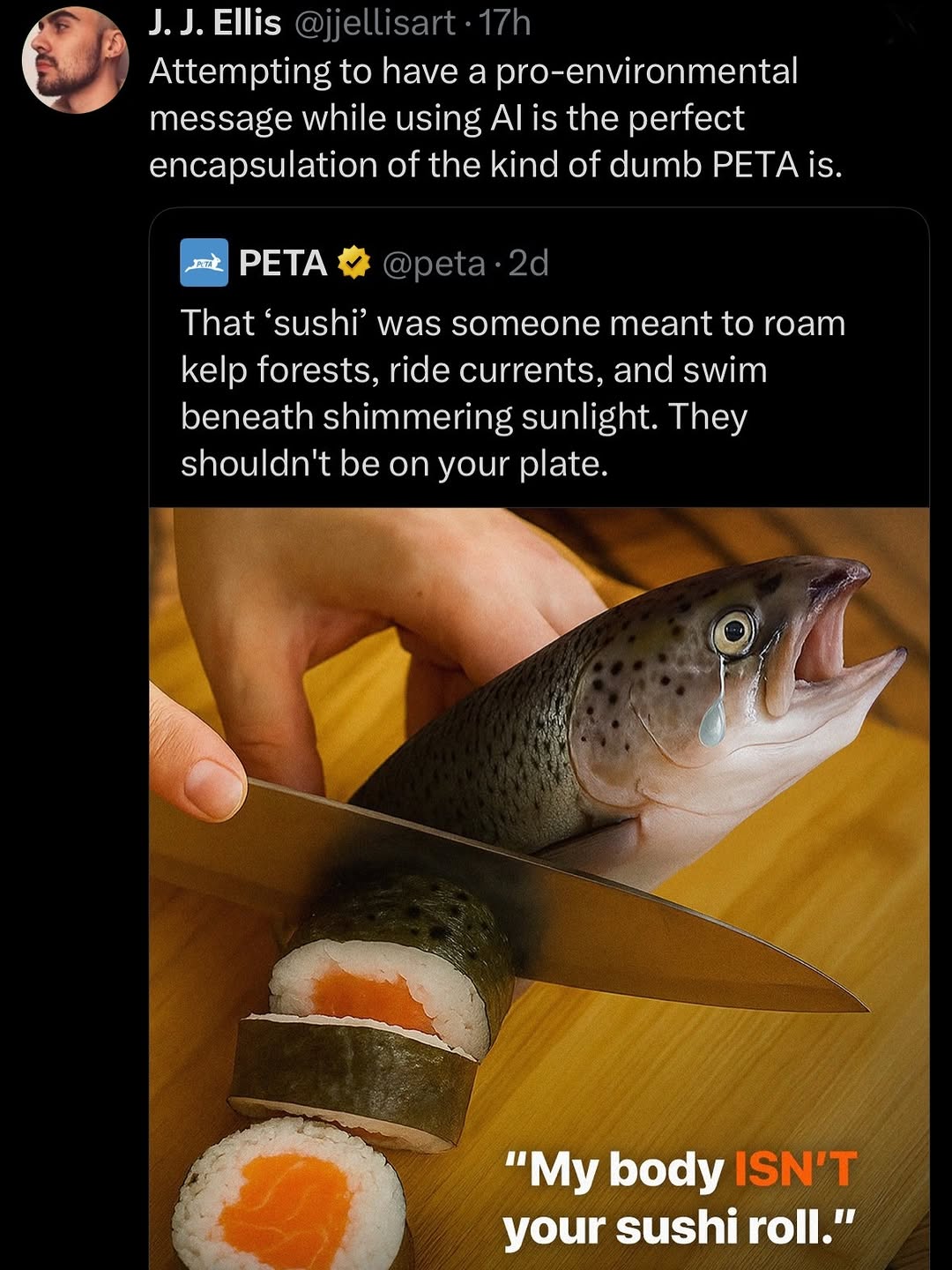
It’s not really that complicated a strategy for a large, well-financed team of full time activists to produce, and really it’s within a genre of “leveraging propagandized outrage” shock activism seen more frequently in the past decade from larger advocacy groups. Like those incidents of people vandalizing art with soup, or pouring products on the ground in grocery stores, or painting monuments. It generates outrage, that outrage garauntees wide news coverage, that wide news coverage reaches and activates 100x or 1000x the number of fresh new activists that traditional advocacy acts might, making the media-directed vitreol of millions who will forget and move on within a week fantastically worthwhile. It basically taps into the power of existing propaganda against a movement, using it to ultimately drive interest in the movement. I forget where I was reading an interview with a Greenpeace leader, about how they simply couldn’t pass on these tactics because of how effective they are, and they arrived at that conclusion not by prediction but by experience.
Sure. Anyone who is aligned with the mission will perceive this as an expert move. Similarly, Trump or Musk supporters do the same. Hence, 4D chess.
From what I gathered reading the interview mentioned (I’ll see if I can find it) it was the statistical results they couldn’t argue with. There was just as much skepticism and resistance to these tactics internally, until the results couldn’t be ignored. Activists are generally concerned about likability and are not analagous to nihilistic billionaire narcissists.
edit - This article by a disruptive politics researcher isn’t the interview I’m looking for but it illustrates my ideas here better than I have.
Are you referring to The credibility of shock advocacy: Animal rights attack messages
That seems to align with your argument but not with the topic. The study was focused on corporate pig farm.
This is a terrible sample to base any conclusions on.
And this indicates it is not a generally useful approach.
The study doesn’t measure how long the effect lasts; outrage is fleeting.
No, but I edited my previous comment to link to an article that’s close to what I’ve been trying to explain.