If you’re tired of constantly buying new filament spools for your 3D printer? Look no further! In this video, we'll show you how to easily and quickly place ...
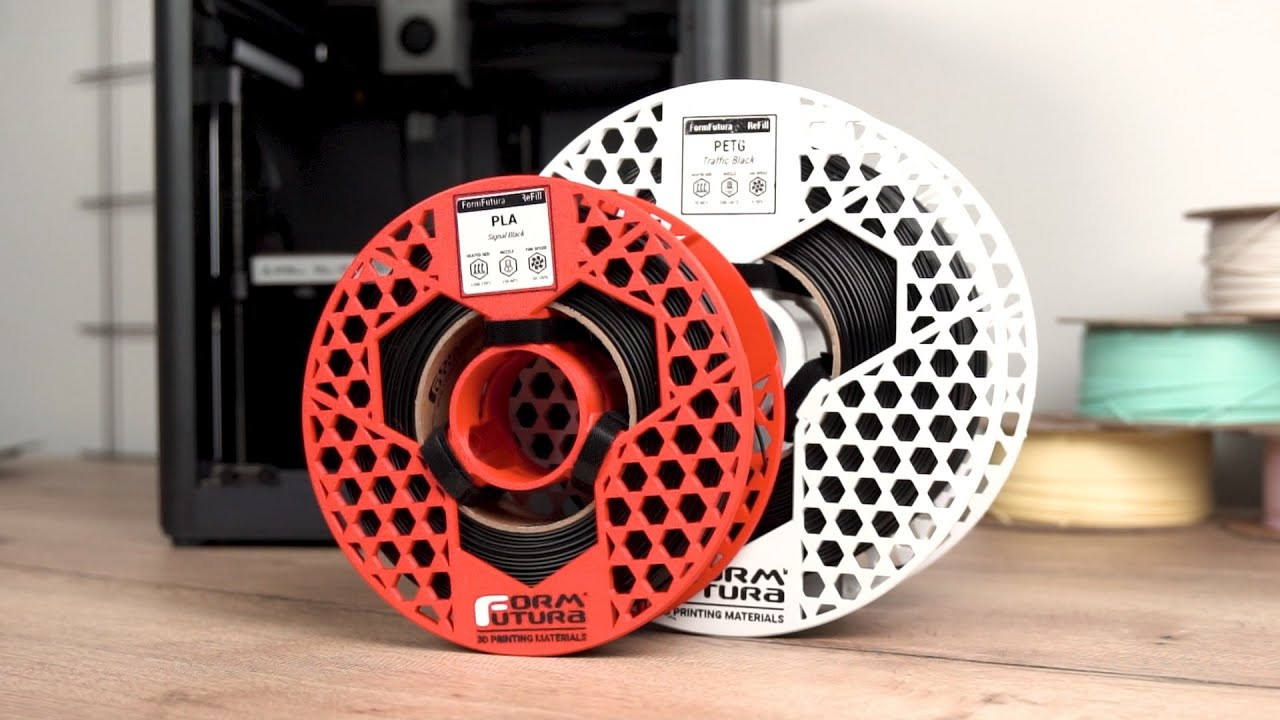
Filament is wound around a cardboard core and secured with straps. This allows the reuse of the spool sides, reducing waste.
My experience with cardboard spools is that they deform a lot more easily than plastic. This is a problem for me as I vacuum seal my spools for storage since I live in a swampy area. Once deformed, they don’t roll as smoothly (and they already don’t roll as smoothly as plastic even without deformation). They also shed a lot of dust.
I prefer not throwing away plastic spools, so I still mostly prefer cardboard, but a solution like this one is the sweet spot IMHO.
To be fair, never had a problem with cardboard spools so far. But I also have a reusable spool from Sunlu I’m using for most of my “normal” filament where color doesn’t matter.


My experience with cardboard spools is that they deform a lot more easily than plastic. This is a problem for me as I vacuum seal my spools for storage since I live in a swampy area. Once deformed, they don’t roll as smoothly (and they already don’t roll as smoothly as plastic even without deformation). They also shed a lot of dust.
I prefer not throwing away plastic spools, so I still mostly prefer cardboard, but a solution like this one is the sweet spot IMHO.
Print a plastic hub and insert before you vacuumed seal, easy to reuse and makes the cardboard rolls easy
To be fair, never had a problem with cardboard spools so far. But I also have a reusable spool from Sunlu I’m using for most of my “normal” filament where color doesn’t matter.